Fixed Drug Eruption Hyperpigmentation Treatment
Fixed drug eruption FDE is a well-defined circular hyperpigmenting plaque that recurs as one or a few lesions always in fixed locations upon ingestion of a drug. In addition there are esthetic concerns.
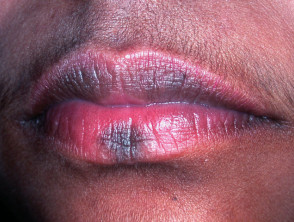 Fixed Drug Eruption Dermnet Nz
Sparfloxacin a synthetic second generation broad spectrum aminodifluoroquinolone antibiotic has excellent penetration into respiratory tissues and has good activity against Gram-positive Gram-negative and atypical bacteria.
Fixed drug eruption hyperpigmentation treatment. Although the lesions are distinctive the diagnosis of. Test patients who have widespread hyperpigmentation not caused by drugs for primary biliary cholangitis hemochromatosis and Addison disease. The primary approach and treatment for all types of FDEs are to identify and remove the causative agent often accomplished by a thorough history of medication and other chemical exposures.
Separate oral re-challenge tests 2 weeks later with cetirizine and levocetirizine produced similar lesions. The main ones implicated include non-steroidal anti- inflammatory drugs NSAIDs phenytoin antimalarials amiodarone antipsychotic drugs cytotoxic drugs tetracyclines and heavy metals. 172019 The treatment of hyperpigmentation is complicated.
Therefore drug-induced hyperpigmentation should be diagnosed and treated by dermatologists and any other specialty involved. Laser and light therapy for cutaneous vascular lesions. A fixed drug eruption FDE is a relatively common reaction associated with more than 100 medications.
9102020 The major categories of causative agents of fixed drug eruption include antibiotics antiepileptics nonsteroidal anti-inflammatory agents sildenafil and phenothiazines although numerous other. Fixed drug eruption FDE is a type of drug reaction characterized by localized erythema hyperpigmentation and bullous at the same site s generally observed following every intake of. It is defined as a same-site recurrence with exposure to a particular medication.
The lesions resolved with topical corticosteroids leaving hyperpigmentation. Lichenoid drug eruption drug-induced lichen planus Longitudinal melanonychia. 22 rows 9102020 Fixed drug eruption due to norfloxacin and cross-reactivity with other quinolones.
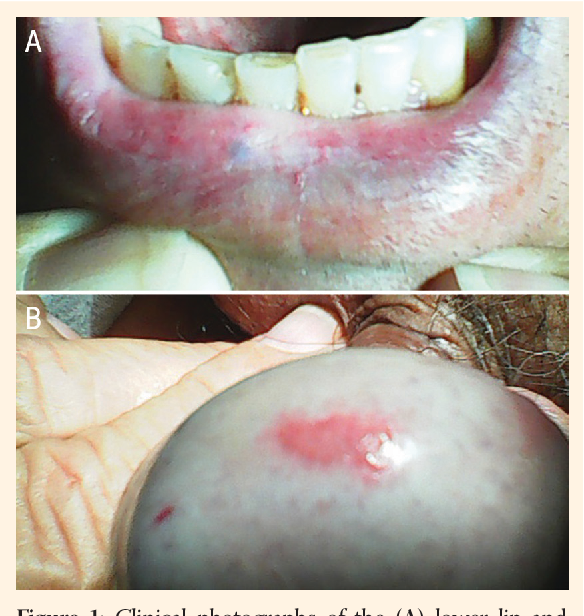
There were superficial crusted lesions of a fixed drug eruption on the lower lip and the glans penis and these subsided with topical betamethasone 005 cream in about 3 days. Acute FDE usually presents with a single or a small number of dusky red or violaceous plaques that resolve leaving postinflammatory hyperpigmentation picture 1A-C. Analgesics anti-inflammatories Paracetamol acetaminophen Non-steroidal anti-inflammatory drugs NSAID aspirin ibuprofen naproxen piroxicam mefenamic acid.
Treat melasma initially with a combination of hydroquinone 2 to 4 tretinoin 005 to 1 and a class V to VII topical corticosteroid. Overview of clinical use. FDE commonly occurs on the genitals lips trunk and hands.
He was advised to avoid both drugs in the future. 142020 Fixed drug eruption FDE is a distinctive type of cutaneous drug reaction that characteristically recurs in the same locations upon reexposure to the offending drug. Barbiturates and other anticonvulsants as well as nonnarcotic analgesics are known to produce this eruption as well.
Laser and light therapy for cutaneous hyperpigmentation. The therapy of hyperpigmentation is based on accelerate epidermal turnover with removal of pigment in superficial layer glycolic acid salicylic acid and lactic acid increase in melanosome transfer and downregulation of tyrosinase Tretinoin retard melanocyte proliferation melanocyte secretory function and inhibition of inflammation corticosteroids and inhibition of enzyme. Drug-induced skin pigmentation accounts for 1020 of all cases of acquired hyperpigmentation.
For further diagnosis the patient was tested intradermally with intravenous preparations of fluconazole voriconazole and metronidazole on the left volar lower arm with late readings at 24 and 48 hours. 12112018 The intermittent nature of the flares and the macular hyperpigmentation were clinically suggestive of a fixed drug eruption FDE. Injectable soft tissue fillers.
Amoxicillin was the probable inducer based on oral provocation test with Amoksina tablet however patch testing with amoxicillin on previously affected and unaffected skin remained negative. Sulfa drugs tetracyclines penicillins NSAIDs metronidazole and fluoroquinolones. Histopathology showed nonspecific features of inflammation and dermal melanophages.
Pigmentation may be induced by a wide variety of drugs. The medications most likely to produce a fixed drug eruption include the antibiotics.
 Derm Dx Pruritic Hyperpigmentation Of The Lips Clinical Advisor
Pdf A Probable Case Of Mucosal Fixed Drug Eruption Following Treatment With Silodosin Semantic Scholar
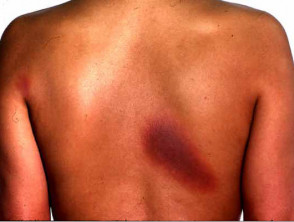 Fixed Drug Eruption Dermnet Nz
 Fixed Drug Eruptions
